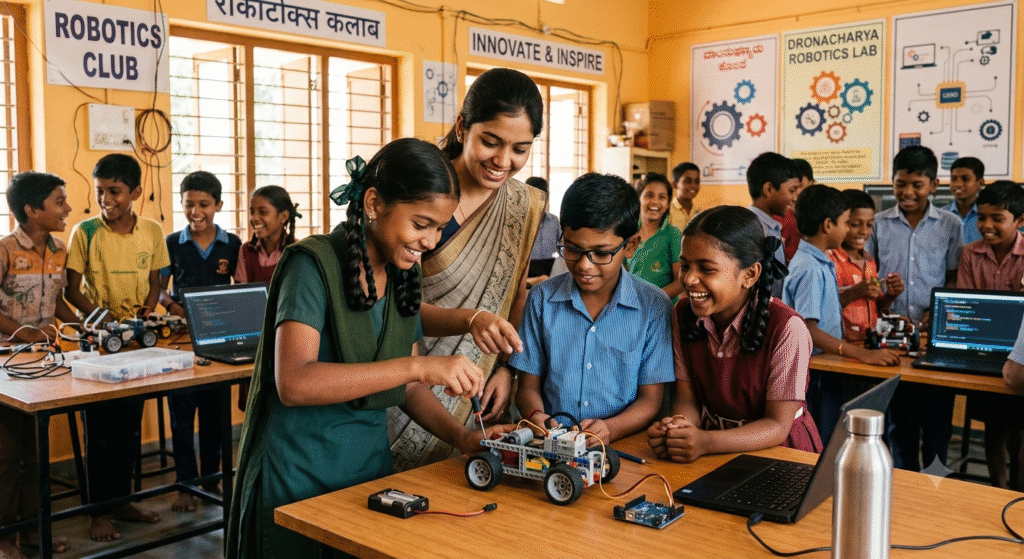
Preparing Young Minds for the Future
Introducing robotics at an early age can help children become creators of technology rather than just users of technology.
Why Robotics Matters
Robotics develops valuable skills such as:
- Critical thinking
- Logical reasoning
- Teamwork
- Creativity
- Programming
- Engineering concepts
- Innovation
These skills are useful across many careers.
Robotics in Schools
Schools can establish robotics clubs where students learn through hands-on projects.
Activities may include:
- Building simple robots
- Programming sensors
- Learning artificial intelligence
- Participating in robotics competitions
- Designing automation projects
These experiences encourage curiosity and confidence.
Real-World Applications
Students should understand how robotics is already improving society through:
- Healthcare
- Agriculture
- Manufacturing
- Disaster management
- Space exploration
- Environmental monitoring
- Smart cities
Learning these applications helps students connect classroom knowledge with real-life challenges.
Community Robotics Programs
Community centers can organize:
- Weekend robotics workshops
- Coding bootcamps
- Innovation fairs
- Science exhibitions
- Technology hackathons
Such programs make technology accessible to students from diverse backgrounds.
Supporting Future Careers
The demand for professionals in robotics, AI, automation, and software development continues to grow.
Early exposure can help students prepare for careers in:
- Artificial Intelligence
- Robotics Engineering
- Automation
- Electronics
- Data Science
- Software Development
A Vision for Yerwada
Imagine every municipal school in Yerwada having access to robotics kits, coding classes, and innovation labs. Such initiatives could inspire students to become future scientists, engineers, entrepreneurs, and innovators.
Conclusion
Investing in robotics education is an investment in the future. By encouraging curiosity, creativity, and practical learning, we can empower the next generation to solve tomorrow’s challenges.