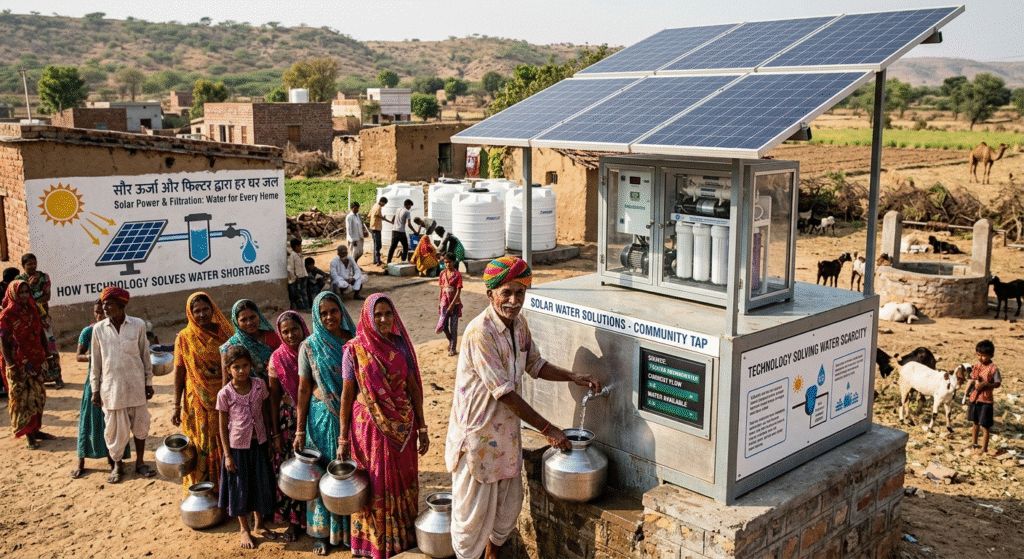
Water Conservation Is Everyone’s Responsibility
Water is one of the world’s most valuable resources, yet many urban communities face increasing pressure on water supplies due to population growth, climate variability, and aging infrastructure.
Technology offers practical solutions that can help communities use water more efficiently and reduce unnecessary losses.
Smart Water Meters
Smart meters allow households and authorities to monitor water consumption in real time.
Benefits include:
- Early leak detection
- Better awareness of usage
- Reduced wastage
- Accurate billing
- Improved conservation
IoT-Based Leak Detection
Many cities lose significant amounts of water through hidden leaks.
Internet of Things (IoT) sensors can:
- Detect pipeline leaks
- Monitor water pressure
- Send instant alerts
- Reduce maintenance costs
- Prevent major water losses
Rainwater Harvesting Monitoring
Technology can improve rainwater harvesting systems by:
- Measuring storage levels
- Monitoring rainfall
- Tracking water quality
- Automating water distribution
These systems help maximize the use of rainwater.
AI for Water Management
Artificial Intelligence can analyze water usage patterns and support better planning.
Possible applications include:
- Forecasting water demand
- Identifying high-consumption areas
- Optimizing supply schedules
- Detecting unusual usage patterns
This enables more informed decision-making.
Smart Irrigation
Public gardens and parks can benefit from smart irrigation systems that use weather data and soil moisture sensors to deliver water only when necessary.
This conserves water while keeping green spaces healthy.
Community Awareness
Technology is most effective when combined with responsible behavior.
Citizens can contribute by:
- Repairing household leaks promptly
- Using water-efficient appliances
- Harvesting rainwater where feasible
- Reusing greywater for gardening
- Reporting public water leakages
A Sustainable Future
Water conservation requires collaboration between citizens, local authorities, engineers, educational institutions, and community organizations.
By adopting smart technologies and promoting responsible water use, communities can build greater resilience against future water challenges while protecting this essential resource for generations to come.